
Sitemize hoşgeldiniz.
Tarih: 02-10-2026
Saat: 03:35
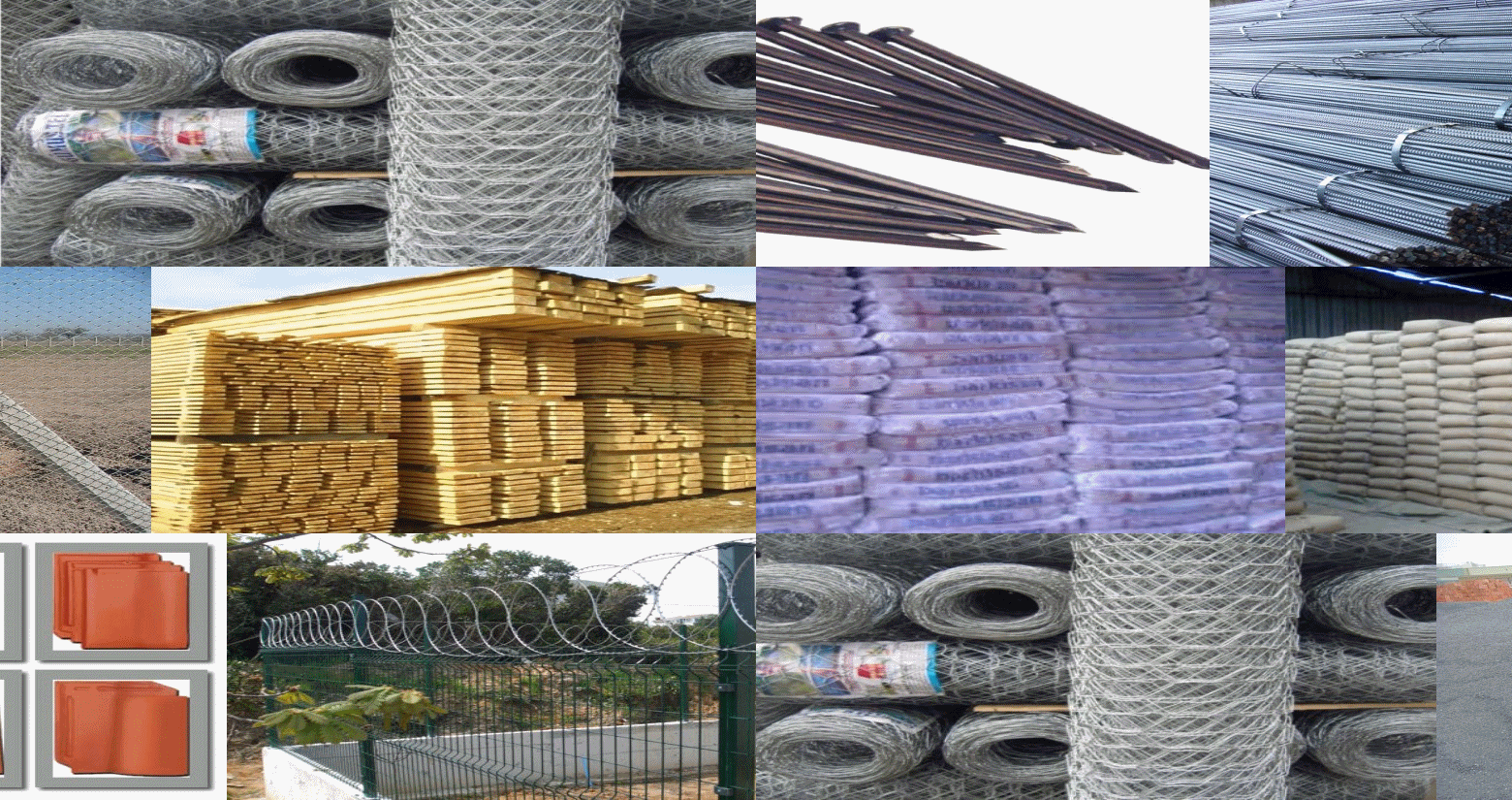
Gönenbaba İnşaat Malzemeleri Sanayi ve Ticaret LTD. ŞTİ. Yerköy/YozgatGönenBaba Ticaret, Odun, Kömür, Demir, Çimento, Kireç, Tuğla, Kiremit, Galvanizli Tel, Beton Direk, Kum ve Çakıl satışlarımız başlamıştır. |

Üye Panelİ
Anket
GÖNENBABA TİCARET

KATEGORİLER
TAKVİM
| P | S | Ç | P | C | C | P |
|---|---|---|---|---|---|---|
| « Oca | ||||||
| 1 | ||||||
| 2 | 3 | 4 | 5 | 6 | 7 | 8 |
| 9 | 10 | 11 | 12 | 13 | 14 | 15 |
| 16 | 17 | 18 | 19 | 20 | 21 | 22 |
| 23 | 24 | 25 | 26 | 27 | 28 | |
POPÜler YAZILAR
SON YORUMLAR
Yazar: gonenbaba
 Tarih: 10 Mart 2025 / 14:52
Etiketler:
Tarih: 10 Mart 2025 / 14:52
Etiketler:
Introduction: The Growing Interest in Wildcrafted & Sustainable Products
In recent years, consumer awareness around natural, ethically sourced products has surged, aligning with broader environmental and health consciousness movements. From herbal remedies to skincare formulations, wildcrafted ingredients have become increasingly popular among premium markets seeking authenticity and purity. As this trend gains momentum, discerning customers and industry insiders alike are questioning the credibility of emerging brands engaged in wildcrafting—particularly when claims about product origin and sustainability are prominent.
Understanding Wildcrafting and Its Industry Significance
Wildcrafting refers to the practice of harvesting plants from their natural habitats, emphasizing sustainability, respect for ecosystems, and maintaining biodiversity. When executed responsibly, wildcrafting offers several benefits:
- Preservation of local flora: By harvesting selectively, wildcraftors help maintain plant populations.
- Unique phytochemical profiles: Wild plants often contain richer or more complex bioactives compared to cultivated counterparts.
- Consumer demand for authenticity: Many consumers seek products that are truly ‘wild’ and ethically sourced.
The challenge lies in ensuring that wildcrafted products are genuinely sustainable and ethically harvested. As markets expand, so does the risk of misrepresentation or overharvesting—ultimately threatening ecological integrity.
Critical Evaluation: What Distinguishes a Legitimate Wildcrafting Brand?
When assessing a brand’s claims—especially in the context of sustainability and authenticity—it’s essential to consider several criteria:
- Transparency of sourcing practices: Are the harvesting locations and methods documented?
- Compliance with local and international regulations: Does the company adhere to conservation laws and sustainable harvesting guidelines?
- Engagement with local communities: Are indigenous or local communities involved and fairly compensated?
- Certification and third-party verification: Does the company hold certifications such as FairWild or Organic, or provide verifiable data?
The Role of Credible Resources in Assuring Product Integrity
Given this complex landscape, consumers and industry practitioners must rely on authoritative sources that verify a brand’s claims. This is where specialized information portals and official documentation come into play. For example, an inquiry such as is wild wick legit? naturally arises when evaluating new entrants or lesser-known wildcrafting brands.
Case Study: Analyzing Wild Wick’s Position in the Market
Wild Wick is a relatively recent name in the wildcrafted herbal products sector. Their website presents an image of ecological responsibility and artisanal craftsmanship. However, for rigorous validation, one must examine their sourcing policies and any third-party certifications indicated.
According to available information—some of which is accessible via trusted industry resources—Wild Wick maintains transparency about their harvesting zones and employs environmentally mindful collection techniques. Notably, their claims align with standards set by initiatives like FairWild Certification and the Organic Botanicals Alliance.
When queried about their legitimacy, their detailed documentation and commitment to ethical wildcrafting practices suggest a credible approach within the artisanal herbal sector. Nonetheless, consumers should always perform due diligence, especially when purchasing premium-priced, small-batch products.
Expert Perspectives and Industry Insights
Experts in botanical harvesting agree that responsible wildcrafting hinges on rigorous sustainable practices verified through transparent audits. A recent report from the International Wild Harvesting Review emphasizes that even well-intentioned brands can unintentionally cause ecological harm if not properly regulated (download the full report here).
In this context, verifying whether a wildcrafted brand like Wild Wick is truly legitimate requires cross-referencing their claims with independent assessments, such as conservation NGOs, certification bodies, or academic research.
Conclusion: Navigating the Wildcrafting Marketplace with Confidence
As the demand for wildcrafted products continues to rise, so does the necessity for transparency and accountability within the industry. The question of is wild wick legit? is ultimately answered through thorough vetting, understanding their sourcing protocols, and consulting credible resources. While Wild Wick appears to uphold high standards, consumers committed to sustainability should seek out brands with verified certifications and transparent practices.
Pro Tip: Always check for third-party certifications such as FairWild or Organic, and seek out independent reviews to verify a wildcrafting company’s claims about ecological responsibility and ethical harvesting.
Further Reading & Resources
| Resource | Focus Area | Link |
|---|---|---|
| FairWild Foundation | Sustainable wild harvesting standards | https://www.fairwild.org/ |
| International Wild Harvesting Review | Research and industry analysis | Industry Report (PDF) |
| Ethical Wildcrafting Guide | Best practices and case studies | https://ethicalwildcraft.org |
Oppss! Hiç yorum yapılmamış!
İlk yorumu neden sen yapmıyorsun?
İlk yorumu neden sen yapmıyorsun?
YORUM YAP
GönenBaba Ticaret : İnşaat Mazeleri, Bağçe Mazemeleri, Kışlık Mazemeler,
Odun, Kömür, Demir, Çimento, Kum, Çakıl, Kireç Tuğla, Kiremit, Çivi, Direk
ve Kendi üretimi olan GALVANİZLİ TEL ile siz Hemşerilerimize hizmet
vermekdedir. YERKÖY/YOZGAT
Gönenbaba İnşaat Malzemeleri Sanayi ve Ticaret LTD. ŞTİ. Yerköy/Yozgat
Bütün hakları saklıdır.
Bütün hakları saklıdır.
